Crossroads
By: Trevor J Hubbs
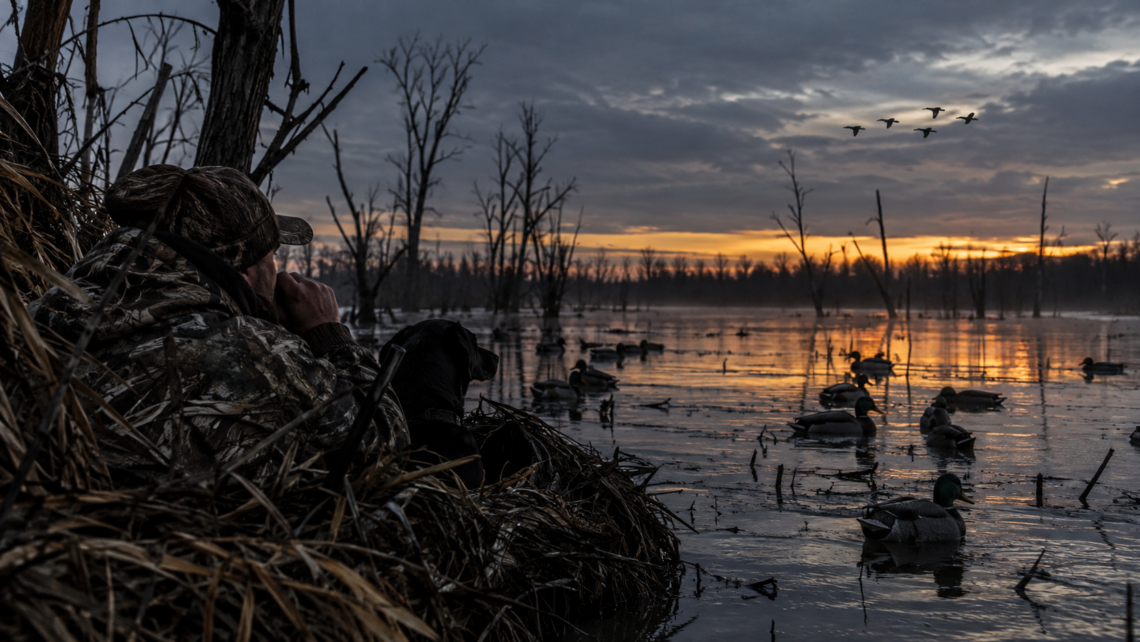
The crossroads where madness and transcendence meet lives at the end of duck season. When the world and all the vibrant colors of the marsh have faded into the chocolate milk brown of Kaskaskia River mud the veil between knowing everything and knowing nothing is thinnest. This is where the effects of too much caffeine, lack of sleep, or some improper chemical balance in most waterfowlers brains combines with the failing light to create a nexus between worlds. In this space you can’t quite tell what’s real and what’s not.
Every gust of wind through the trees sounds like the wings of a flock dumping into your spread. You swear you can hear quaking from your decoys before the sun rises.
It’s late winter in the south and the spider ice splintering out from the leeward side of every stick or rock threatens you with the season’s end. There’s a chill in the air that crept up on you gradually. You first noticed it in your thermos struggling to keep the coffee as hot as it did a few months ago. The cold that you once felt only in idle fingers and toes has now crept into your chest and bones. It lives there. At the end of the hunt after climbing into your truck and driving for ten minutes the sensation surprises you when your fingertips and nose suddenly come alive again with nerve endings letting you know how cold you really were.
Every factor that can be imagined has run through your brain. Missed opportunities on third passes that never turned into ducks in the decoys. Taking a poke at a flock at the edge of your range out of fear of losing them forever when they probably would have come closer. You change your decoy formation eighteen times and still the ducks evade you.
After hunting 30+ days this season your eyes block out the parts of the world you don’t need, and you exist in a tunnel vision universe of wind, decoys, and water. Starlings and seagulls dance along the perimeter of your new world but you only care about the ducks. The mallard has become king of this world, and you pine for the green head and cream belly drifting through the trees with reckless abandon. The lesser ranks of the royal court no longer interest you. The jester wood duck has long gone south. The delicious duke of early season teal too has gone away. All that remains is the king and the peasant rabble of mergansers and divers. You must find and please the king.
After months of studying birds and their reactions to calls and decoy spreads, your brain is a mess of red twine stretched between what you imagine to be pivotal data points in the season. Did the migration come, and you missed it? Will it ever come again? “Who knows,” you answer your own question in the empty truck cab, “but it’d be great if one more group of mallards would work for me, just one more time.”

You May Also Like
Ding Darling: The Father of the Duck Stamp
For Whom The Bell Tolls: A Buffalo on Hemingway’s Birthday