The Irish Dragoon
By Cecil Cherry
As we reflect on the 150th anniversary of The Battle of the Little Bighorn, we want to remember one of the 268 cavalry troopers killed under Custer’s command, Captain Myles Keogh. From Ireland to Rome, to the American Civil War, then to the Indian Wars of the Old West, Keogh left his mark in some of military history’s most famous moments. Keogh was a dashing cavalier, mercenary, and soldier of fortune, a true professional warrior.
Keogh was born on March 25, 1840 in Leighlinbridge, County Carlow, Ireland on a farm that raised mostly barley. By the time he was twenty years old, Keogh volunteered to defend Pope Pius against the forces of Italian unification. With the threat the Papal States would be seized, the pope reached out to Ireland for soldiers to defend the Papal Land. Keogh was one of 1,400 Irishmen to take up the call to arms and travel to Italy to serve in the Papal Army.
Keogh was commissioned as a 20-year-old lieutenant. He saw combat in the Battle of Ancona. The battle lasted from September 24 through September 29, 1860. Sardinia forces eventually defeated the Papal Army. Keogh fought valiantly and with distinction. For his heroic service in the Papal Army, he was awarded the Pro Petri Sede and Ordine di San Gregorio medals. He would wear these medals in a leather pouch around his neck for the rest of his life.
By 1861 the American Civil War had just begun and the fledgling Union Army was seeking veteran military officers with combat experience. Irish American Archbishop John Hughs was sent to Italy to recruit officers by President Abraham Lincoln. Again, Keogh volunteered to fight in another country’s war, along with two other men.
Keogh was assigned to General John Buford’s cavalry and would go on to see fighting in 80 battles. He distinguished himself in several major campaigns of the war. For his courage in the Gettysburg campaign, Keogh was promoted to the temporary rank of Brevet Major. Throughout the Civil War, he served with bravery in America, just as he did for the Papal Army in Italy. Keogh would see service in Georgia, North Carolina, and Virginia. He would impress superior officers time and time again. General Schofield even remarked, “Keogh is one of the most gallant and efficient young cavalry officers I have ever known.” Keogh would be promoted to Brevet Lieutenant Colonel before the war ended.
Although a distinguished soldier, Keogh experienced loss as well during the war. The two men who volunteered with Keogh in 1860 did not survive the war. Additionally, a woman Keogh planned to marry died shortly after the conclusion of hostilities. With the war over, the army was decreasing in size. Keogh was reverted to the permanent rank of captain with the downsizing of military forces. Then fate stepped in again and Keogh was assigned to the U.S. 7th Cavalry under Lieutenant George Armstrong Custer.
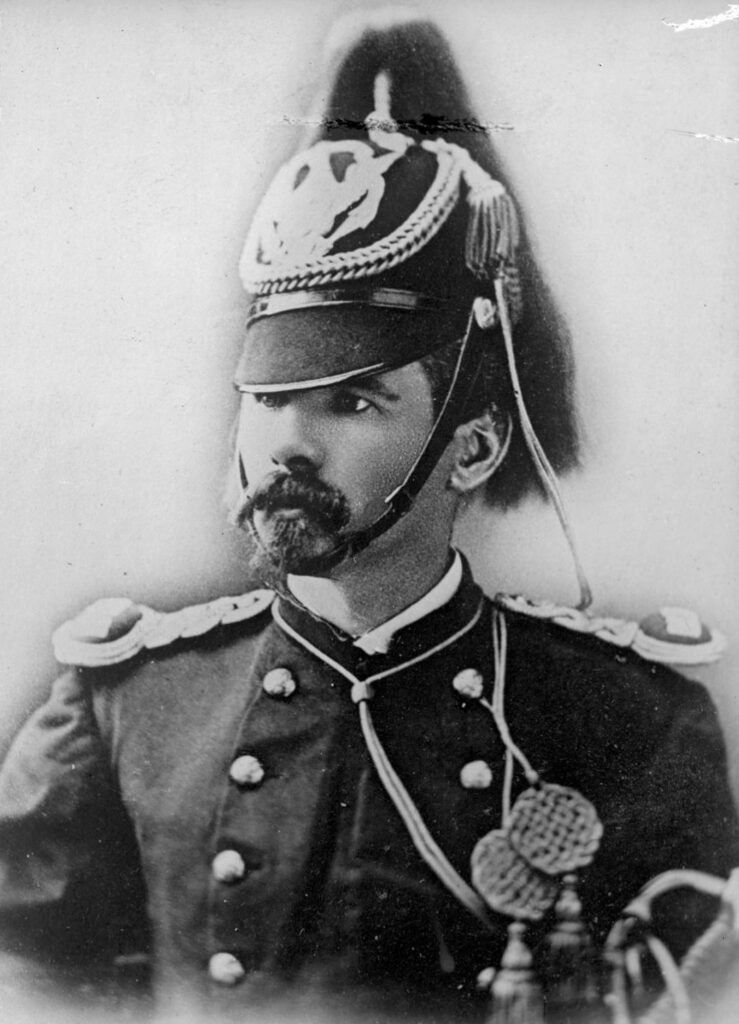
Keogh now found himself in the American West and took command of Company I at Fort Riley in Kansas. It seemed that military service on the frontier mirrored the quote “war consists of months of intolerable boredom interspersed by moments of extreme fear.” Life on a frontier fort could be isolated and lonely on the western plains, far from civilization and large cities. The strict military discipline began with reveille in the predawn hours followed by inspections and administrative duties of the officers like Keogh. Then without warning there was always the threat of hostile action, but large-scale battles were rare. Scouting parties undertaken by the troopers were dangerous and there was always the concern of being attacked when they were far away from the fort.
Keogh was known to be a morose 34-year-old bachelor. He was an irritable, moody, melancholy man. Keogh even turned to the bottle; however, his drinking did not impede his career as it had several other Army officers on the plains. He was a handsome, dashing cavalier on the Western frontier, making him a favorite of the ladies. By Keogh’s own accounts, the fairer sex proved to be an area in his life he was simply powerless over.
In 1874, Keogh inherited his family’s estate in Kilkenny. Keogh took a seven month leave from the army and travelled back to his homeland of Ireland to take care of personal affairs. Keogh could have left the army and returned to his family land and lived like a country gentleman. Instead, he transferred the property to his sister and, after his leave was over, returned to America, to Fort Abraham Lincoln in the Dakota Territory and eventual fame and glory.
With a morbid sense of foreboding, Keogh wrote friends in Auburn, New York and left burial instructions. He also purchased a $10,000.00 life insurance policy. Keogh would soon go on campaign one last time on the Little Bighorn Campaign.
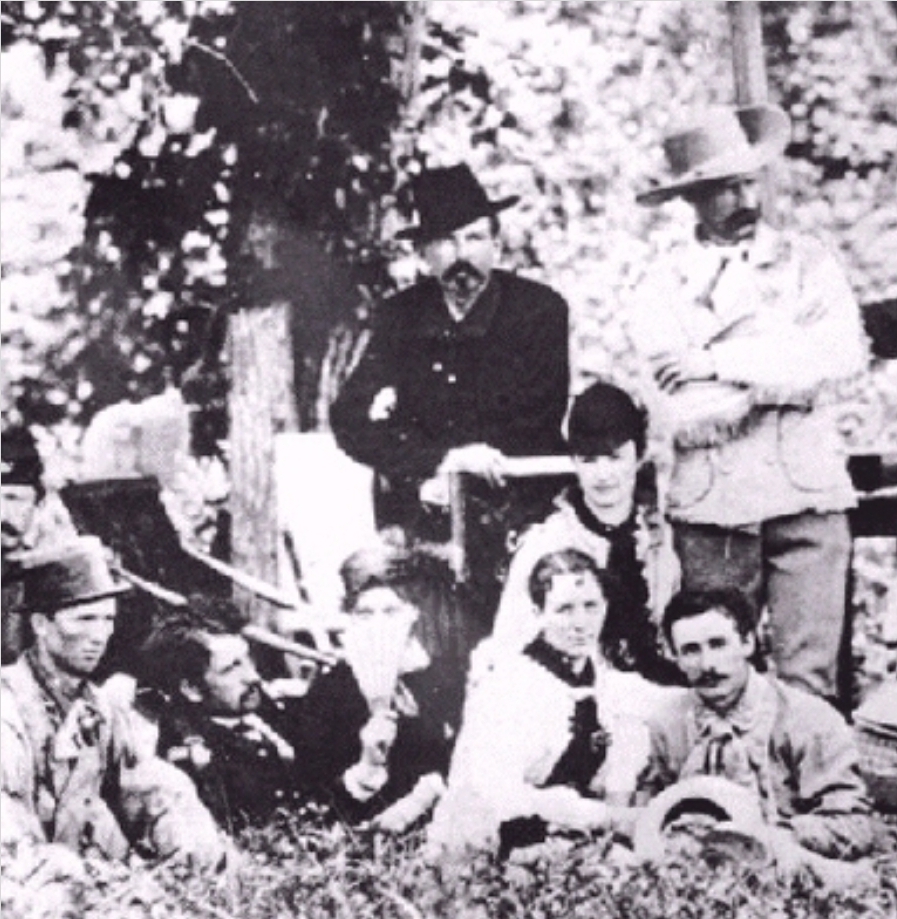
On May 17, 1876 Keogh, with the rest of Custer’s command, left Fort Lincoln for a major campaign against the Sioux and Cheyenne. This was a part of a much larger column commanded by General Alfred Terry. The Seventh was supposed to eventually meet up with General George Crook and General John Gibbon. The different commands would wage war against the Plains Indians in order for government forces to take over the Black Hills.
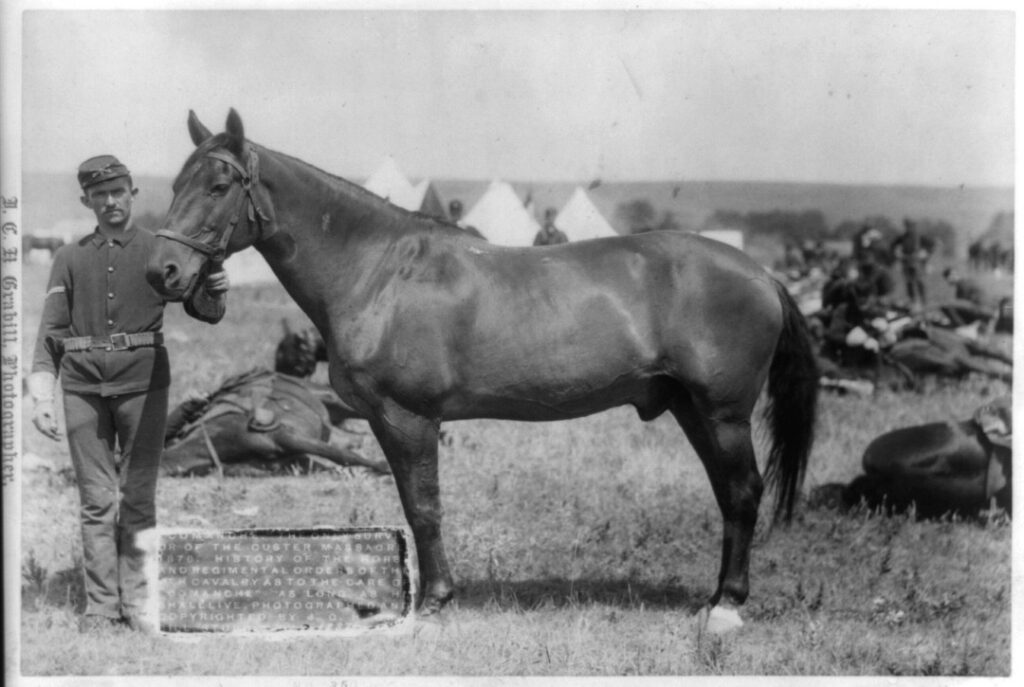
Keogh was mounted on his horse, Comanche, for the expedition into the Little Bighorn. Comanche was a clay-bank sorrel horse, dark crème in color with a black mane and tail, weighing 925 pounds and standing 15 hands tall. Comanche received his nom de guerre in 1868 after being shot in the hindquarter by an Indian arrow during a skirmish in Kansas . It was said the horse “screamed like a Comanche” when he was struck. Keogh liked the name and it stuck.
On June 24, 1876 Custer and the Seventh arrived at the Little Bighorn. Based on early information regarding the size of the Indian village, Custer had initially planned to attack in the early morning hours, thinking the Indians could be easily defeated while catching the warriors still asleep, assuring an early victory in this campaign. A much larger Indian encampment was discovered, however, than what initial intelligence reports stated. Based on this new information, Custer decided to attack on the afternoon of June 25th and split his command. He assigned Captain Frederick Benteen 125 men to scout south of the Indian encampment, and assigned 140 men to Major Marcus Reno to be used in a direct charge into the village. This left Custer 210 men to stop escaping warriors from the main battle. Custer went on to further split his immediate command even more to flank the village and help in the assault of the village. Keogh was the commander of I Company. He took his troopers to an area known as Battle Ridge, which was close by Custer’s last stand location. The battle raged from around 2:15 p.m. until 5:15 p.m. Even after learning that the Indian encampment was much larger than originally thought, Custer still severely underestimated the size of the enemy force.
During the skirmish, it is believed Comanche was shot by an Indian. The wound corresponded to a gunshot wound Keogh suffered. Keogh’s knee was shattered and lined up where the rider of the horse would have been mounted when Comanche was shot. Eyewitness testimony from Indians claim to have seen a cavalryman dismount and return gunfire all while holding the reins of his mount. This is believed by historians to be Keogh after he and Comanche had been wounded in combat. Keogh was later found on the battlefield shot to death.
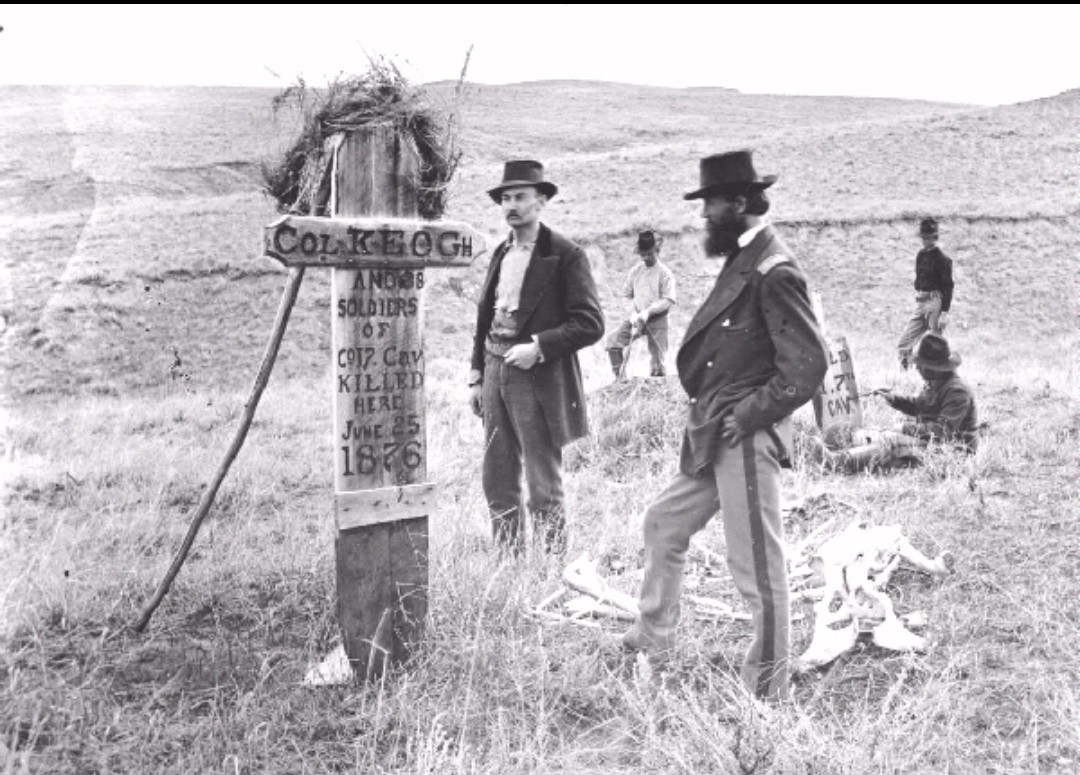
Nearly all of the trooper’s bodies were desecrated by Sioux and Cheyenne women and younger braves. The bodies were found to be mutilated beyond recognition. Custer’s brother, Tom, was discovered disemboweled with his head bashed in. Many troopers were shot numerous times with arrows in all parts of their bodies. Keogh, however, was discovered stripped of all of his clothes, except his socks. His body was left intact. Historians believe what saved him from the disfigurement suffered by his comrades were the Papal medals he wore around his neck.
Nearby, Comanche was discovered suffering from many injuries. When Comanche was first located, it was determined he could not survive his wounds and he was ordered to be put down. Soldiers could not bring themselves to destroy such a warrior. He was instead cared for and taken to the Rosebud River and placed on the steamship Far West for return to Fort Lincoln.
The grim task of burying the dead in shallow graves took place in the days after the battle. Keogh was initially buried with his command. His remains were disinterred and reburied in the Fort Hill Cemetery in Auburn, New York on October 26, 1877.
Comanche, following his return to Fort Lincoln, was nursed back to health and was treated as a living hero, often times referred to as the sole survivor of the Little Bighorn. Comanche became the mascot of the Seventh Cavalry at Fort Riley, Kansas and lived there until he was 29 years old. He died from colic on November 7, 1891. Comanche’s remains were taxidermied and placed on display at the University of Kansas. The mount was refurbished in 2005 and he was placed in a climate-controlled room to preserve him for another 150 years.
America is approaching the 250th anniversary of being a country. The Battle of the Little Bighorn occurred just weeks before the centennial celebrating the birth of our nation. We honor the founding of the United States as well as the brutal fight known as “Custer’s Last Stand” 150 years later. These two major events that shaped and formed our great country should be remembered for the sacrifice and great cost of men like Myles Keogh. General Douglas Macarthur said in his farewell speech to the West Point Corps of Cadets in 1962 that “only the dead have seen the end of war.”


You May Also Like
The Patina Economy
March 19, 2026
A Western Hunt
October 10, 2022