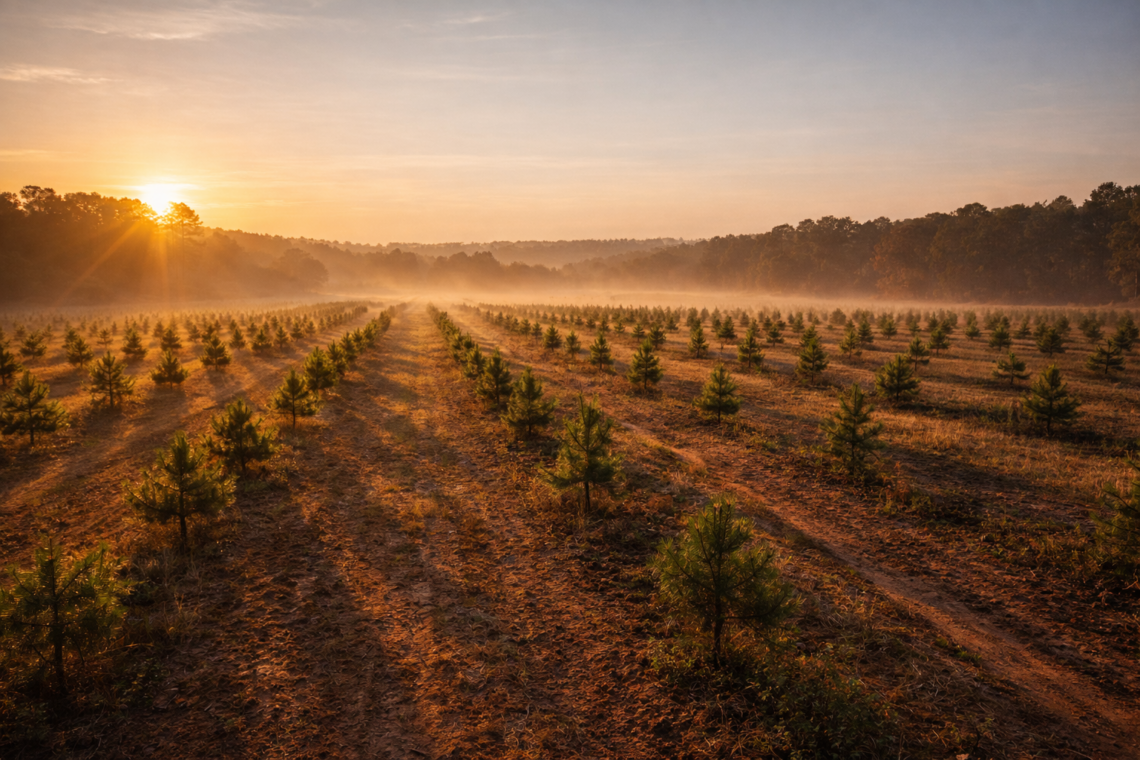
The Long Game — Planting Trees You’ll Never Sit Under
By Robbie Perdue
Most people think in seasons.
Plant this spring. Hunt this fall. Fix what’s broken before winter.
That’s the rhythm most folks operate on, and there’s nothing wrong with it. It’s practical. It gets results. It keeps things moving.
But land doesn’t think in seasons.
Land thinks in decades.
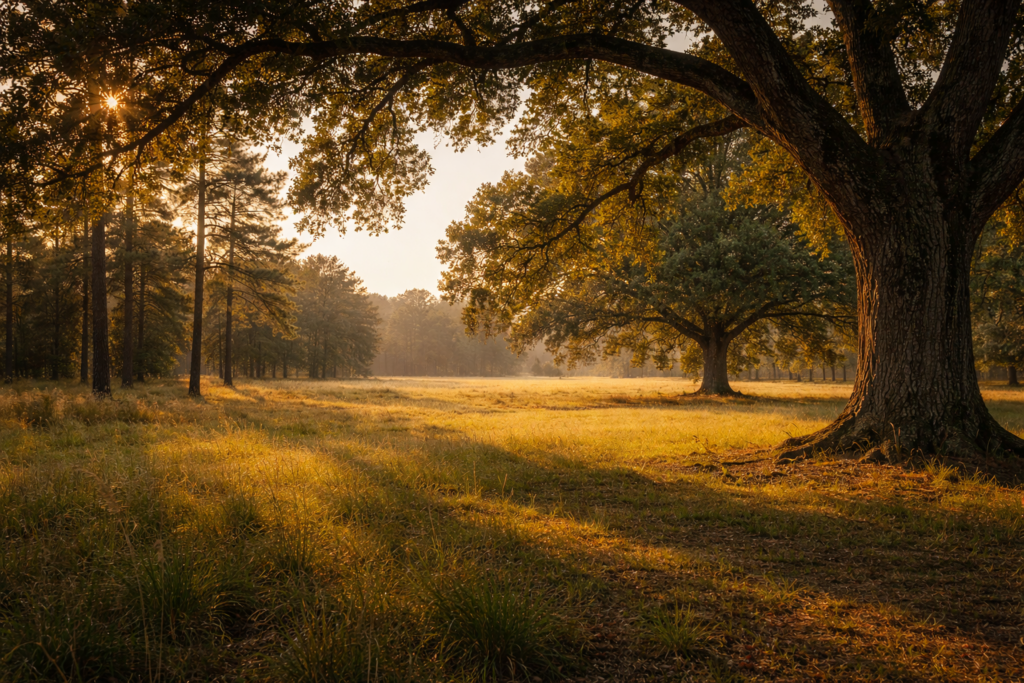
You see it the moment you start paying attention. Trees that were planted before you were born are the ones providing shade now. Fields that were neglected twenty years ago are the ones still struggling today. Water that was redirected decades back still shapes how a property drains after a heavy rain.
Everything on a piece of land is a delayed reaction.
And once you understand that, it changes how you make decisions.
Because suddenly, the question isn’t “Will this work this year?”
It’s “What does this look like in ten?”
Or twenty.
Or longer than you might even be around to see.
That’s where most people stop.
Because that kind of thinking requires something most folks don’t practice anymore—patience without payoff.
There’s a quiet kind of work that happens on good land.
It’s not flashy. It doesn’t show up in photos very well. And most of the time, no one’s around to see it.
Planting trees is like that.
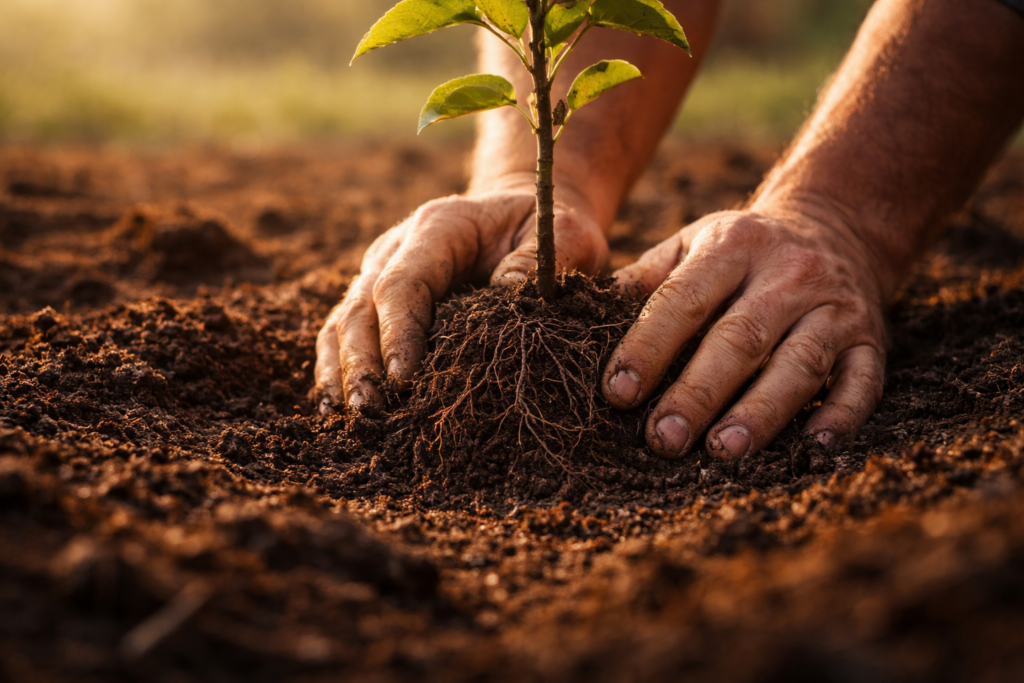
You dig a hole. You set something small into the ground. You water it, protect it, maybe check on it for a while. And then… you wait.
Not for weeks.
For years.
And even then, you’re not waiting for something dramatic. You’re waiting for slow, steady growth that barely feels noticeable day to day. The kind of change you only recognize when you look back.
That’s the kind of work that separates short-term thinking from long-term stewardship.
Because planting something you’ll never fully benefit from requires a shift in mindset. It means accepting that the value of what you’re doing isn’t tied to what you personally get out of it.
It’s tied to what comes after you.
That’s a hard sell in a world built on immediate results.
But it’s the only way land actually improves over time.
Every mature tree you admire was planted by someone who understood that.
Or left alone by someone who had the discipline not to cut it down.
Either way, it wasn’t an accident.
The long game isn’t about trees.
Not really.
It’s about how you choose to think.
You can manage land for what it gives you right now. Plenty of people do. There’s always something to plant, something to hunt, something to improve for the next season.
Or you can manage land like it’s something you’re borrowing.
Something that existed before you and will exist after you.
That perspective changes everything.
It changes how you cut timber. How you plant fields. How you handle water. How much you take—and how much you leave alone.
It slows you down.
And slowing down is where better decisions usually live.
Because when you’re not chasing immediate results, you start seeing patterns. You start noticing what actually works over time. You stop reacting to every short-term problem and start designing something more stable.
Something that holds.
Planting trees you’ll never sit under is a simple idea.
But it represents something bigger.
It means you’re thinking past yourself.
And in the long run, that’s the only kind of thinking that actually leaves something behind.
Robbie Perdue
is a native North Carolinian who enjoys cooking, butchery, and is passionate about all things BBQ. He straddles two worlds as an IT professional and a farmer who loves heritage livestock and heirloom vegetables. His perfect day would be hunting deer, dove, or ducks then babysitting his smoker while watching the sunset over the blackwater of Lake Waccamaw.
You May Also Like
Unexpected Rustic
September 1, 2022
Charleston Has Gone to the Dogs
February 22, 2024