There was a time when you could tell what a man raised by the shape of his barn.
Dairy barns were long and deliberate: wide doors, heavy timber, built for weight and repetition. They smelled of silage and warm breath in winter. The rooflines were practical, not pretty. Built to hold animals, hay, and routine.
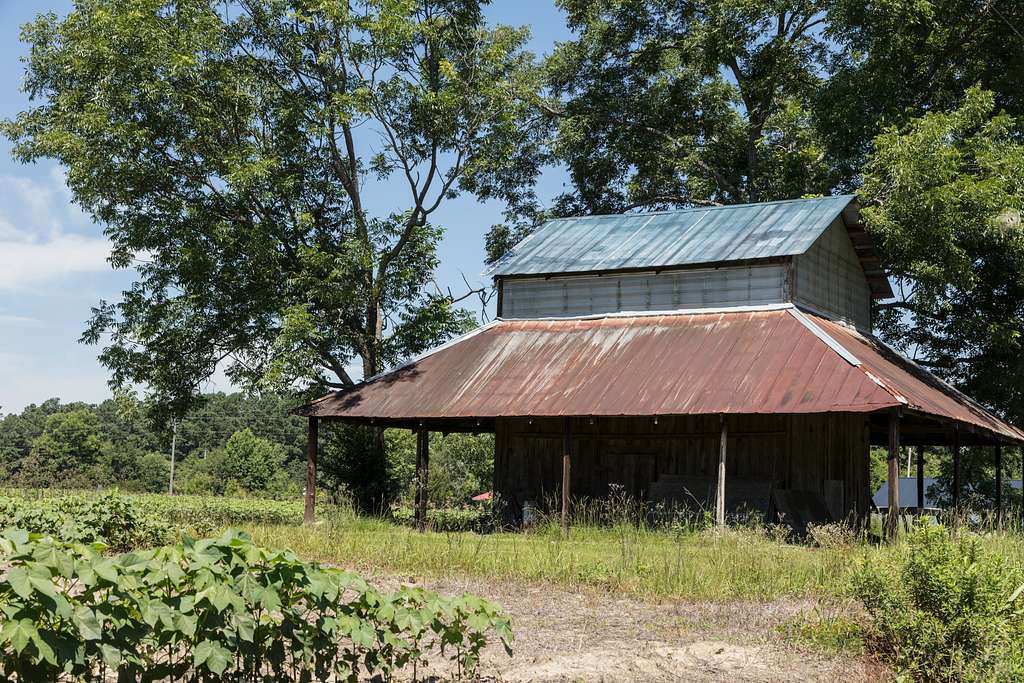
Tobacco barns were different. Smaller. Steeper. Square and upright against the sky. Designed for curing, for heat and patience. Their boards darkened from years of smoke, the interiors lined with tier poles that once held leaf after leaf in careful rows.
If you drive the back roads now, you’ll notice something.
The dairy barns are mostly gone.
Time and hurricanes finished what economics started. Once the cows leave, the roof follows. Wide spans collapse first. The center gives way. The land returns to grass.
The tobacco barns are still standing, for now.
They are narrower. Simpler. Easier to ignore. But the curing fires have long gone cold. The boards are silvering. The tin loosens. You can see daylight through the slats where smoke once leaked out.
And soon, many of them will fall too.
This isn’t nostalgia for tobacco or milk prices. It’s acknowledgment of what built this region. Columbus County, Bladen, Robeson. This soil fed more than families. It built schools. Churches. Main streets. Hardware stores.
The barns were infrastructure.
They were work made visible.
A dairy barn was daily labor; before sunrise, after sunset. Milking lines and feed troughs. A tobacco barn was seasonal intensity; cropping, stringing, firing, waiting for the leaf to cure just right.
Both required patience. Both required attention.
Now, most of that labor has moved elsewhere. Consolidated. Industrialized. Or disappeared.
When an old barn falls, it doesn’t make the news. There’s no ceremony. No marker placed where it stood. The field simply opens up.
And yet something changes in the horizon.
A barn anchors a landscape. It gives scale to the sky. Without it, the land feels wider, but also emptier.
The danger isn’t that barns disappear.
It’s that we forget what they required.
Early mornings.
Strong backs.
Risk every season.
Faith in weather you could not control.
Old barns were not symbols. They were working structures. They held hay, cattle, leaf, sweat.
Their collapse isn’t just architectural.
It’s generational.
Soon, the tobacco barns will be the rare ones. Then the rare ones will be curiosities. Then photographs.
If you see one still standing, slow down.
Notice the roofline. The way it leans. The way the boards breathe light.
Because it won’t stand forever.
And what it represents shouldn’t disappear with it.