Newsletter

The Practicalities and Quiet Lessons of Raising Your Own Meat

By robbie perdue

From feed to freezer

Most people who talk about raising their own meat begin with reasons.
Health. Ethics. Control. Independence.

Those reasons are not wrong. But they are rarely the ones that carry you through.

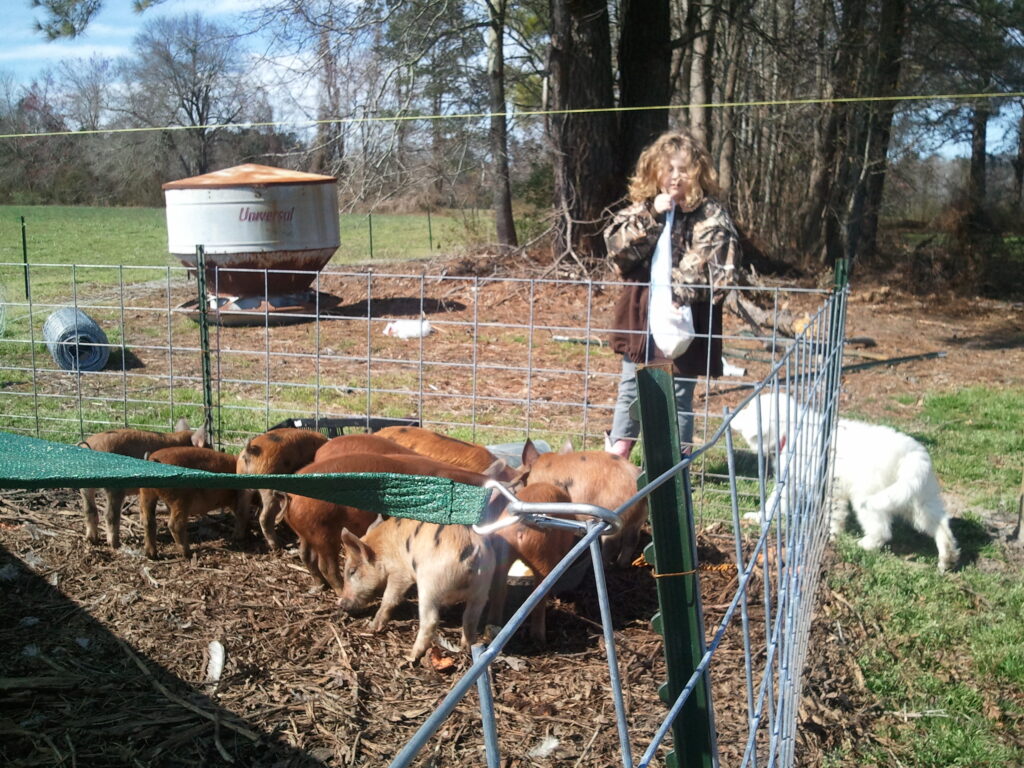
Raising your own meat does not begin with a philosophy. It begins with animals that are suddenly yours to account for—every day, in all weather, regardless of what else is happening in your life. Once that starts, the calendar changes shape. The work stops asking why and starts asking when.

I raised livestock for years. Long enough to settle into routines. Long enough for plans to fail. Long enough to learn which parts of the work were physical and which ones lived entirely in your head. What follows is not a guide. It’s a record of what the work quietly demands, from the moment animals arrive until the freezer finally closes.

Why People Start—and Why That Changes

At the beginning, everything feels clean. The animals aren’t there yet, so the idea of them does most of the work. You imagine good days, honest food, a deeper connection to the land. You imagine doing something right.

Then the animals arrive.

Once they do, the question shifts almost immediately. It is no longer why am I doing this?
It becomes what has to happen next?

Animals do not wait for motivation. They do not care about intentions. They introduce urgency into places you didn’t know were flexible before. That urgency doesn’t fade. It becomes the background rhythm of your days.

Feed: The First Long Agreement

Feed is the first reminder that raising animals is not a project—it’s a contract.

It is not just about cost. It is about continuity. Feed shows up again tomorrow. And the day after that. And the day after that. You learn quickly that running out is not an option, and that depending on systems outside your fence line carries risk whether you acknowledge it or not.

For a long time, feed arrived the same way it always had. It felt settled. Then one season it wasn’t. A supplier changed. Service stopped. The system revealed how narrow the margin really was.

The animals didn’t care why the feed wasn’t there. They still needed to eat.

Feed teaches you that self-reliance is never absolute. It is negotiated daily.

Water: When Everything Breaks at Once

Water feels simpler than feed—until it isn’t.

I remember the day clearly. My dad called and said the cows didn’t have water. I told him to check the pump. It tripped the breaker sometimes. That had happened before. It felt manageable.

He called back. The breaker wasn’t tripped.

Someone had stolen the pump.

There was no water anywhere on the farm. Not a little problem. Not something to fix later. Thirsty cows do not wait. They do not understand explanations. They do not care how it happened.

In that moment, every plan collapsed into a single fact: the animals depended on us, and the system we trusted no longer existed.

That is what water teaches you. It exposes how fragile your assumptions are. It reminds you that infrastructure can disappear overnight, and when it does, there is no grace period. Only urgency.

Water is heavier than feed in every sense. Physically. Emotionally. Logistically. It demands immediate action, and it does not care how old you are, how tired you feel, or how carefully you thought things were arranged.

Nothing reveals the true cost of raising animals faster than a water failure.

Fencing and Containment

Fencing is not about perfection. It is about peace.

Once you have had animals out when they shouldn’t be, your relationship with fences changes. You stop thinking in terms of minimal solutions and start thinking in terms of redundancy. The goal becomes eliminating that phone call—the one where someone is yelling that the animals are loose and you are already stretched thin.

Containment teaches humility. Animals will test you. Weather will test you. Time will test you. When a system works, it does so quietly. When it fails, it fails loudly and usually at the worst possible moment.

Over time, fencing stops being about keeping animals in and starts being about keeping panic out.

The Daily Rhythm—and the Cost of Flexibility

Raising your own meat costs flexibility first.

Feeding happens when it happens. Water has to be checked. Fences have to be walked. Weather is not an excuse. Travel becomes a negotiation. Illness complicates everything.

The chores themselves may not take long, but they divide the day into before and after. You don’t squeeze them in. You build your life around them.

For some people, that rhythm becomes grounding. For others, it becomes exhausting. Neither outcome is a moral statement. It is simply information.

Attachment, Whether You Want It or Not

People like to pretend attachment is optional. It isn’t.

Routine creates familiarity. Familiarity creates recognition. You notice behaviors. You linger longer than planned. You enjoy the sound of animals eating. You feel the absence when a pen is empty.

You can avoid names if you want. It doesn’t change much.

Connection is not a failure of discipline. It is part of the cost of doing the work honestly.

Butcher Day

Everything moves toward this day, whether you talk about it or not.

It is rarely easy, but it is often clear. By then, you know whether you kept your end of the agreement. You know whether the animals lived well. That knowledge matters.

Preparation does not make the day painless. It makes it calm. When it is done, the responsibility does not vanish—it changes form. It becomes stored, wrapped, labeled, and carried forward.

Raising your own meat requires you to finish what you start.

The Freezer

A full freezer brings a satisfaction that is hard to explain if you haven’t lived the work behind it.

It also introduces a new vigilance. Power matters. Space matters. Failure becomes expensive. You cook differently. You waste less. You think twice before buying what you already worked to provide.

A freezer full of meat slows you down. It changes how you eat and how you think about food.

What Remains

I eventually stepped away from raising livestock. Time and age change the terms. What once fit easily into a day begins to press harder on the body. That is not failure. It is accounting.

The animals left. The lessons stayed.

Raising your own meat is not a test of virtue. It is not required. It is not something everyone should do. It is a choice to accept responsibility daily and to live with the consequences when systems fail.

If you do it, do it with open eyes.
If you don’t, respect the work it takes for someone else to do it well.

Either way, the quiet lessons remain.

is a native North Carolinian who enjoys cooking, butchery, and is passionate about all things BBQ. He straddles two worlds as an IT professional and a farmer who loves heritage livestock and heirloom vegetables. His perfect day would be hunting deer, dove, or ducks then babysitting his smoker while watching the sunset over the blackwater of Lake Waccamaw.

Leave a Reply

Your email address will not be published. Required fields are marked *